Monday, November 21, 2016

mabeco

mabeco

The mabeco (Lycaon pictus) also known as the African wild dog or the African wild dog is a typical African canid that lives in savanna and sparse vegetation. The species has been common throughout sub-Saharan Africa (except in areas of tropical or dense rainforest and desert areas). Its present geographical distribution is limited to southern Africa, especially in Namibia, Zimbabwe, Zambia, Botswana and southern East Africa in Tanzania and northern Mozambique.

It is a highly social animal, spending most of its life in packs controlled by an alpha couple, who own the breeding rights. These packs usually have 7 to 15 individuals, reaching 40. They have separate hierarchies between the sexes and more males than females. The behavior within the pack is usually peaceful and confrontations usually mimic the quarrel of females by breeding. Sick or injured animals are protected and cared for by the group. The fighters are also divided among all members and the pups have privileges and priority in feeding.

The mabeco is a medium-sized predator, about 75 to 110 cm in length and approximately 18 to 36 kg in weight. Its coat, very characteristic with spots of brown, black, white and orange, gave the scientific name to the species: Lycaon pictus means painted wolf. The head is usually darker and the tail ends in a white tuft. The ears are large and rounded, and the long, thin legs end up in strong four-toed paws, unlike other canids.

Saturday, November 19, 2016

pallas cat

 pallas cat

The pallas cat (Felis manul), also known as Manul, is a small wild cat from Central Asia, living in countries like Mongolia and Russia. Its common name is derived from the name of the one who first described it, Peter Simon Pallas. They are about the size of a domestic cat, ranging from 50 to 62 cm, weigh an average of 4.5 kg. They are short and stocky, plump and have short legs. Its coat is gray but may also be in rusty tones. It has black spots on the head, and black stripes on the back and muzzle. It is a solitary feline, of nocturnal habits and aloof with humans. He eats small rodents and also birds, hunted by the ambush method.
 Their gestation lasts between 66 and 75 days, and up to six kittens can be born per litter. They can live for about 11 years in captivity, a time shorter than that of the domestic cat. The pallas cat is an endangered species as it was hunted to be sold as a pet and its skin was marketed. Now this is forbidden except in Mongolia. Even so, many poachers continue to disrespect the law and sell Manuls furs.

Leopard cat

Leopard cat

Prionailurus bengalensis, known as a leopard cat or Asian leopard, is a small wild cat from Southeast Asia and the Indian Subcontinent. There are eleven subspecies of leopard cat, classified by their wider geographic distributions. The name leopard cat is due to the prevalent spots on all subspecies, similar to those of the leopard, but the relation of this species with the leopard is distant, since the leopard belongs to a different genus, Panthera.

This feline is also known as. This name is probably the result of the partial translation of the English of Asian leopard cat, when "Asian" was added to not be confused with the genus Leopardus of which the ocelot and other felines of South America belong. Note, however, that this species does not belong to the genus Leopardus either, being a distant relative.

Habitat and behavior

The leopard cat is a skilful tree climber. He can swim, but he rarely does. It is a cat of nocturnal habits, and spends the days in burrows, that can be hollow trees, cavities on roots or caves. He can spend some time outside the burrows in areas where there are no humans. The Asian leopard is solitary, except during the mating period. There is no fixed mating period in the southern part of your dwelling area; In the colder habitats to the north, tends to mate between March or April, when the weather is mild enough for newborn puppies to support it. Asian leopards commonly form a lifelong couple, and raise their cubs together for seven to ten months. Full maturity is attained at eighteen months, but in captivity the male may become ready for breeding in seven months, and the female in ten.

Friday, November 18, 2016

vaquita

vaquita

The vaquita (Phocoena sinus) is a cetacean from the Phocoenidae family found in the northern waters of the Gulf of California. It is also known as gulf-of-california marsupial, porpoise of the gulf, pacific-boto and cochito.

The vaquita is a cetacean that was discovered in 1958, but it is believed that there are only less than 100 live specimens of the species. It has a body similar to that of a dolphin. All the vaquitas live on the Mexican Pacific coast.

The danger that attacks them is trawling, which catches them without them being the specific target. Scientists say that if they do not disappear later this year, by 2018 they will be extinct, unless action is taken to save them.

Pink-toothed

Pink-toothed

Pink-toothed, red-headed, pink-headed, blue-footed, blue-headed, boto, square-shore, buckethead or uiara are common names given to 3 species of river dolphins (not to be confused With dolphins, belonging to the family Delphinidae) of the genus Inia. The species are distributed in the Amazon and Solimões (I. geoffrensis), Bolivian (I. boliviensis) and Araguaia (I. araguaiaensis) basins.

It is the largest freshwater dolphin, and one of the cetaceans with the most obvious sexual dimorphism, with males measuring and weighing 16% and 55% more than females. Adults have a rosy color, more prominent in males. Like other odontocetes, it has an organ called melon used for echolocation. The dorsal fin is small, but it is very wide and its pectoral fins are large. This feature along with its medium size and lack of fusion in the cervical vertebrae give it great maneuverability to navigate the flooded forest and capture its prey. It has the widest diet among the odontocetes, feeding mainly on fish but completing with turtles and crabs. In the rainy season it moves to the flooded areas of the forest, where there is a greater supply of food.

In 2011 it was classified by the IUCN in the category of species with insufficient data, due to the uncertainty in relation to the total population, its tendency and the impact of the threats. It is not the subject of significant hunting, but in recent decades it has become frequent accidental catches in fishing nets. Because of its rosy coloration it attracts attention and is one of the species of dolphins kept in captivity in several aquariums in the world, mainly in the United States, Venezuela and Europe, however, it is difficult to maintain and has a high mortality rate in captivity.

Thursday, November 17, 2016

remora

remora

The adaptations that allow an animal to expend the least energy in its displacements are of fundamental importance in the process of evolution. This is the case of the reefs, which, fixed by means of suckers to the skin of fish or cetaceans of great size, travel from one region to another of the oceans.
Remora (Remora remora) is the name given to several species of fish of the genus Echeneis, from the equeneid family, endowed with skeletal bones. They are spread through temperate and tropical seas around the world. It is dark in color and has an elongated body between thirty and ninety centimeters long. Its main characteristic is the organ located in the dorsal region of the body, near the brain zone, which produces, by suction, the effect similar to that of a suction cup.
Thus, they adhere to the skin or the hull of sharks, tunas, swordfish, cetaceans, sea turtles and some vessels, by which they are transported without any effort of their own and protected from predators. This feature represents the maximum efficiency in the energy saving mechanism.
The fixation organ, modifying the dorsal fin, is oval and composed of a series of small transverse blades, which produce small grid-shaped surface cuts. In the periphery of this organ there is a fleshy ridge. The blades are driven voluntarily by the animal, in both directions, with which the retrench can be fixed or released from the organism that carries it. The process does not cause damage to the host's skin and leaves only a few signs in it. In addition to being transported, the remora shares the host's food, taking advantage of the remains of what it consumes. Eventually, it feeds on parasites of the skin of the fish or cetacean that serves as transport, exerting on it a beneficial action.

Wednesday, November 16, 2016

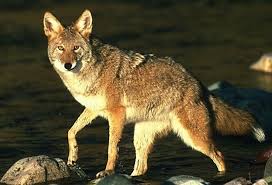
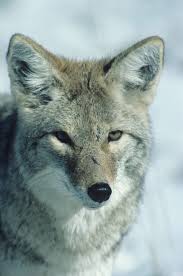
Coyote

Coyote

Coyote (Canis latrans) is a mammal, a member of the Canidae family and the Canis genus. Coyotes are found only in North and Central America. Coyotes usually live alone, but they can organize into packs occasionally. Coyotes live on average 6 years. The word coyote is of Nahuatl origin.

Habitat

Coyotes live only in North America and Central, more specifically in Eastern Alaska, western Canada, much of the western United States and Central America. These animals have no difficulty accommodating themselves in a particular environment. They are found particularly in the deserts, in the forests, mountains, plains and regions of tropical climate.

feeding

Their diet is essentially meat based. Coyotes prefer rabbits, deer, elk, birds, snakes, lizards, fish, sheep, calves and all kinds of carrion they encounter. This does not mean that, from time to time, they also do not eat certain fruits and grams.

In closer contact with man coyotes feed on rats usually found in the trash. Their tendency for adaptability influences their survival, because at any time of the year, regardless of the climatic season, they have a greater facility to find the game. In general they live for about 6 years.